What Did 20+ Years of Homebuilding Teach Brad Cooper About Building Better Homes?
Experience changes the questions a builder asks.
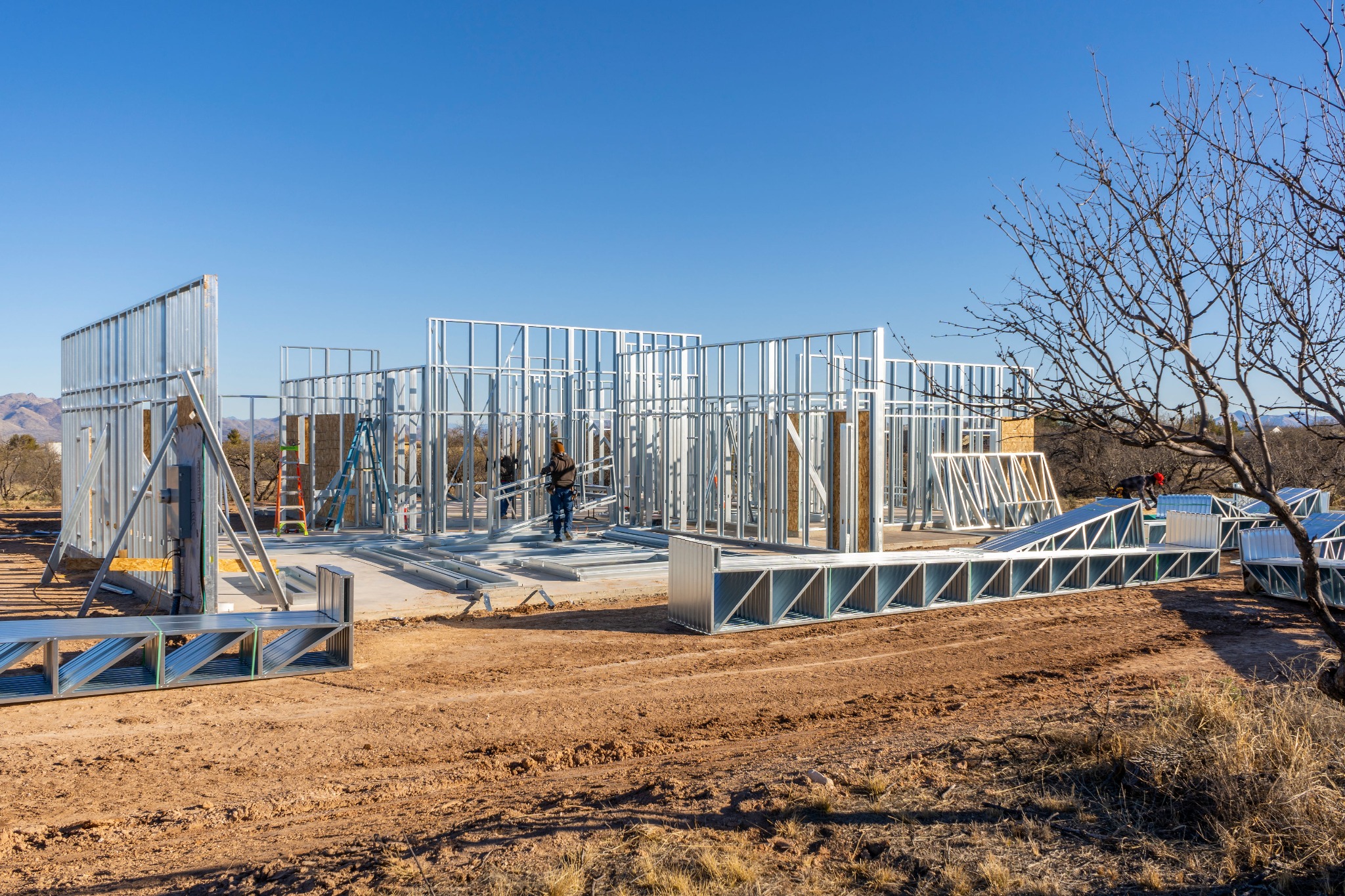
Cold-formed steel framing establishes the geometry of a home before the finishes and fixtures ever arrive.
A new builder may ask, “How do I build this house?” An experienced builder eventually begins asking a different question: “How can I make building this house more predictable?”
That change in perspective is one of the central lessons in Brad Cooper's career. He has been building custom homes since 1997, and decades of working through the realities of residential construction have shaped the way he thinks about materials, framing, engineering, labor, schedules, and the homeowner's experience.
Experience doesn't just teach a builder how to build. It teaches a builder what to prevent.
For Brad, building better homes isn't about chasing a new material simply because it's new. It's about identifying the parts of construction that create unnecessary uncertainty — and finding better ways to control them.
Lesson 1: The Frame Matters More Than Most People Realize
The frame is the skeleton of the house. Everything else depends on it. Walls, windows, doors, roof systems, cabinets, drywall, mechanical systems, electrical work, and finishes all begin with the geometry the structure establishes.
That makes framing a very different decision than choosing a finish. A countertop can be replaced. A light fixture can be moved. But the geometry of the structure influences nearly every trade that follows.
- Straight walls provide a better starting point for drywall and finishes.
- Accurate openings make window and door installation more predictable.
- Stable dimensions reduce the need for downstream correction.
- A coordinated structural system gives other trades a more reliable reference.
- A well-executed frame reduces the number of problems that have to be solved later.
That's one reason MC² Homes chose metal framing for its homes. The decision isn't simply that steel is different from wood — it's that cold-formed steel can be part of a more controlled approach to establishing the structural skeleton.
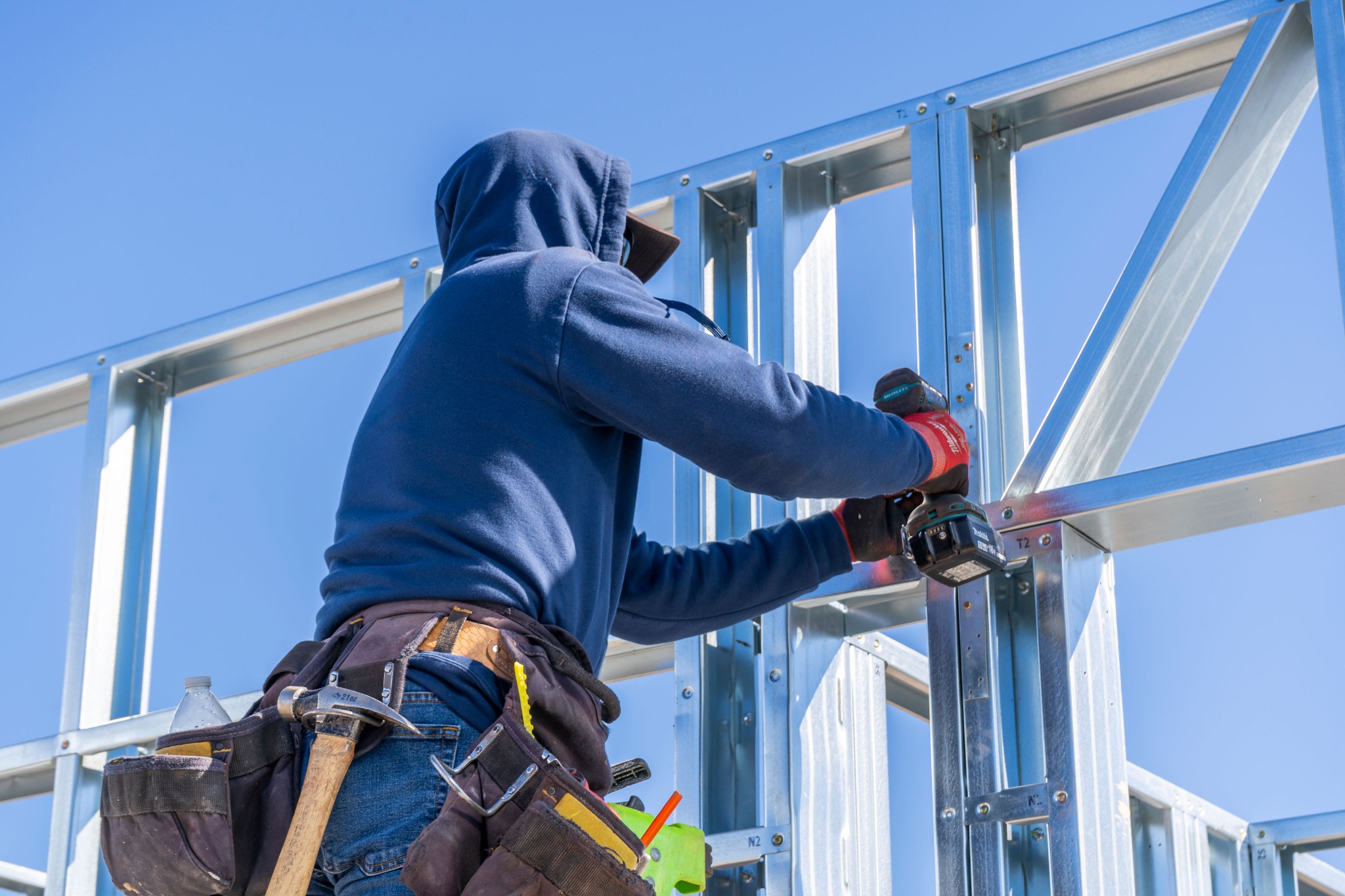
A framer works directly on the cold-formed steel structure. The quality of the frame affects the work of every trade that follows.
Lesson 2: Predictability Matters
A construction project contains thousands of variables. Weather changes. Deliveries change. Subcontractor schedules change. Homeowners make selections. Site conditions reveal surprises. Building departments request revisions. Construction is never completely predictable.
The builder's job isn't to eliminate every variable. It's to reduce the variables that don't need to exist.
A builder cannot control everything. The goal is to control what can be controlled.
That's where engineered framing can help. FrameUpNow's process begins with engineering and uses Building Information Modeling (BIM) to model the structure and derive material information before construction.
The broader lesson is bigger than steel: information has value when it arrives early enough to influence a decision.
Lesson 3: Accuracy Upstream Prevents Problems Downstream
One of the most useful lessons an experienced builder can learn is that the best time to solve many construction problems is before construction begins.
If an issue can be identified during design, engineering, or modeling, that's generally a better time to catch it than after materials arrive at the jobsite and labor has already been committed.
- Move information upstream.
- Resolve more decisions before construction.
- Coordinate the structural system before fabrication.
- Manufacture from that coordinated information.
- Build from a known set of dimensions rather than repeatedly recreating them in the field.
This is one of the fundamental ideas behind digital construction. BIM isn't valuable simply because it's digital. It's valuable because better information can be used earlier in the process.
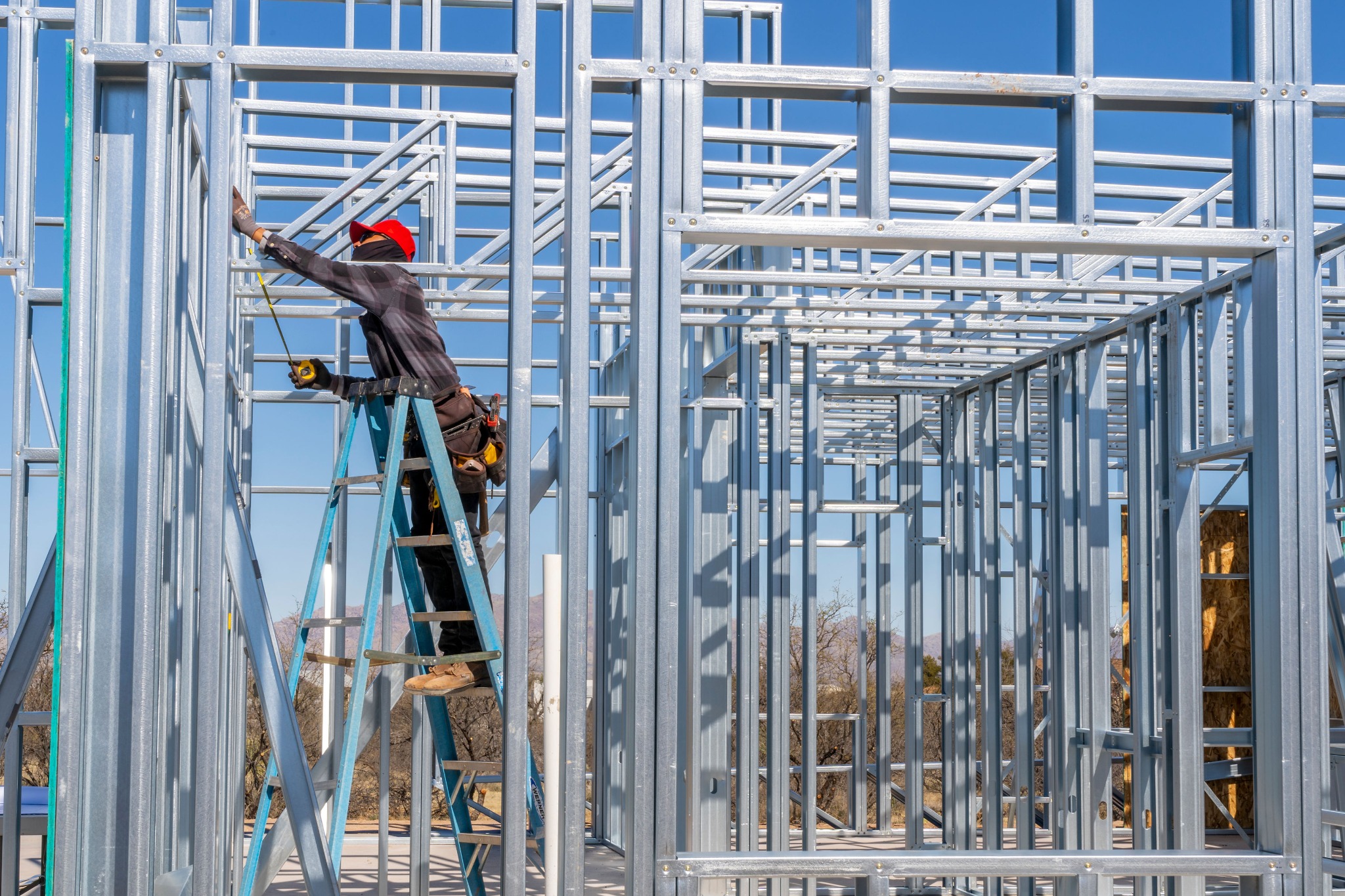
The repeated geometry of cold-formed steel framing illustrates the value of a coordinated structural system: dimensions are established before the trades move in.
Lesson 4: The Homeowner Needs Certainty Too
Builders sometimes forget how stressful construction can be for the homeowner. A homeowner isn't simply buying a finished product — they're committing significant money, time, attention, and trust to a process that can last many months.
Most homeowners can't see the hundreds of decisions being made behind the walls. They experience construction through schedules, changes, communication, visible progress, and whether the project feels under control.
Anything that gives the builder better information can ultimately give the homeowner more confidence. That doesn't mean construction becomes perfect or that unexpected conditions disappear. It means the builder starts with more information and fewer avoidable unknowns.
- Better information can improve planning.
- Better coordination can reduce avoidable surprises.
- More predictable framing gives following trades a better starting point.
- A controlled process makes communication with the homeowner easier.
Brad Cooper's Experience Is Part of the Story
Lesson 5: Better Building Isn't About One Material
Brad's experience points to a larger lesson. The future of construction isn't simply wood versus steel. Materials matter, but the process surrounding those materials matters too.
A steel stud by itself doesn't create a digital construction system. BIM by itself doesn't erect a wall. Engineering by itself doesn't finish a house. The opportunity is created when those pieces work together.
Traditional Construction Question | Experienced Builder's Better Question |
How do we build it? | How can we build it more predictably? |
What material costs less? | What does the entire system cost? |
Can we fix it in the field? | Can we prevent the problem upstream? |
Where is the material? | What information should we have before delivery? |
Who can correct this? | How can we reduce the need for correction? |
Can we build this house? | Can we repeat the process reliably? |
What Else Does Two Decades on the Jobsite Teach a Builder?
The Cost of a Problem Is Rarely Limited to the Problem Itself
An inaccurate opening may look like a small framing issue. But the real cost can include a return trip, schedule disruption, material handling, coordination with another trade, inspection delays, or a finish that has to be redone. Experienced builders learn to look beyond the immediate fix.
Labor Is More Than the Number of People on the Crew
Labor includes measuring, cutting, fitting, handling, correcting, moving material, cleaning up, and returning to work that wasn't done correctly the first time. A system that shifts appropriate work from repeated field operations into engineering and manufacturing can change where labor is spent.
Repeatability Is a Sign of a Mature Building System
A one-time solution can be clever. A repeatable solution is more valuable to a builder. If the same basic process can be used again and again, the builder can improve it, train crews around it, identify failure points, and make the next project more predictable.
The real test of innovation is not whether it works once. It is whether it can work again.
The Frame Sets the Starting Point for Everyone Else
This lesson keeps returning to the same place: the frame. A framing system is the first major three-dimensional statement of the building. When that statement is accurate, stable, and coordinated, the trades that follow have a better foundation.
What Brad's Lessons Mean for MC² Homes
These lessons help explain why MC² Homes uses cold-formed steel framing, and why the company's relationship with FrameUpNow matters. The objective isn't to make a philosophical argument about one material. It's to create a construction process in which engineering, BIM, fabrication, framing, and field construction reinforce one another.
That approach reflects an experienced builder's natural evolution: after enough years on jobsites, the question becomes less about how to react to problems and more about how to design the process so fewer avoidable problems occur in the first place.
The Bigger Lesson: Build With Information
Brad's five core lessons can be reduced to a simple progression:
- The frame matters.
- Predictability matters.
- Accuracy is more valuable when it happens upstream.
- Homeowners benefit when builders have better information.
- Better building is about systems, not isolated materials.
That leads to the larger contrast at the heart of this story:
That's the lesson that connects Brad Cooper, MC² Homes, and FrameUpNow. The objective isn't to remove craftsmanship from construction. It's to give craftsmanship a better, more predictable starting point.
Frequently Asked Questions
Q. How long has Brad Cooper been building homes?
Brad Cooper has been building custom homes since 1997, giving him more than two decades of residential construction experience.
Q. What did Brad Cooper learn from decades of homebuilding?
Two decades of homebuilding taught him five core lessons: the frame matters, predictability matters, upstream accuracy prevents downstream problems, homeowners need certainty, and better building isn't about one material.
Q. Why does the frame matter so much?
The frame establishes the geometry of the house and provides the starting point for the trades that follow. Straighter, more stable, and more accurately coordinated framing can make downstream work more predictable.
Q. Why does predictability matter in construction?
Construction contains thousands of variables. An experienced builder can't eliminate all of them, but can work to reduce avoidable variables through better engineering, coordination, information, and process control.
Q. What is the value of BIM in residential construction?
BIM can model the structure and provide material information before construction. Its value is in making useful information available early enough to coordinate decisions and fabrication.
Q. Does better technology eliminate construction problems?
No. Construction will always involve field conditions, trade coordination, inspections, weather, and other variables. The goal is to reduce avoidable uncertainty, not claim that every problem disappears.
Q. Why does the homeowner benefit from a more predictable process?
Homeowners commit substantial money, time, and trust to construction. Better information and coordination can give the builder more control and increase the homeowner's confidence in the process.
Q. Is this really about steel versus wood?
The central lesson here is broader. Material choice matters, but the larger opportunity is combining the material with engineering, information, coordination, precision manufacturing, and a repeatable construction process.
The Takeaway
After more than 20 years of homebuilding, Brad Cooper's perspective can be summed up in one idea: building better homes starts with making the construction process better.
That means paying attention to the frame. It means valuing predictability. It means moving information upstream. It means understanding that the homeowner experiences the process as much as the finished product. And it means evaluating technology by whether it can actually be built, repeated, and improved.